Business Tips
Team Deskworks
July 30, 2026

Deciding whether to allow dogs in your coworking space comes down to one question: do you have more potential members who want to bring their dogs than members who cannot work around them? If the answer is yes, the next question is how to run it well. The 9 guidelines below are what we use across our own spaces.
Making your coworking space dog-friendly is a business decision, not just a perk. It helps to think about it as a calculation.
On one side: 45 to 60% of remote workers own dogs, and 75% of them say they prefer staying home with their pets over commuting to a space where dogs are not allowed. On the other side: some people are allergic to dogs, some are afraid of them, and some simply prefer to work without animals nearby.
It's a calculation each coworking space needs to make. Are there more potential members out there who have dogs they'd like to bring to work than there are members and potential members who, for some reason, cannot work around dogs? You probably already have a pretty good idea where on the spectrum your spaces fall.
Quantifying how allowing dogs enhances your community is not an exact science, but we have a significant number of members who would not be in our spaces if we didn't welcome their dogs. For many operators, that fact alone settles the question.
A dog-friendly policy gives your coworking space a meaningful differentiator in a market where most spaces offer the same desks, the same internet, and the same coffee. For a member who works remotely and owns a dog, a dog-friendly space removes the biggest barrier to leaving home.
The retention argument is just as strong. Members who bring their dogs build a visible, social connection to your space and community. They are less likely to leave because leaving means finding another dog-friendly option, and those are not always easy to find.
47% of employees now view pet-friendly benefits as a high priority when choosing where to work. Coworking operators who are dog-friendly do not just attract those members – they keep them.
One Center Manager we interviewed put it plainly: "A dog-friendly space might turn away a small percentage of potential members, but the amount of people it helps retain vastly outweighs any negative impact."
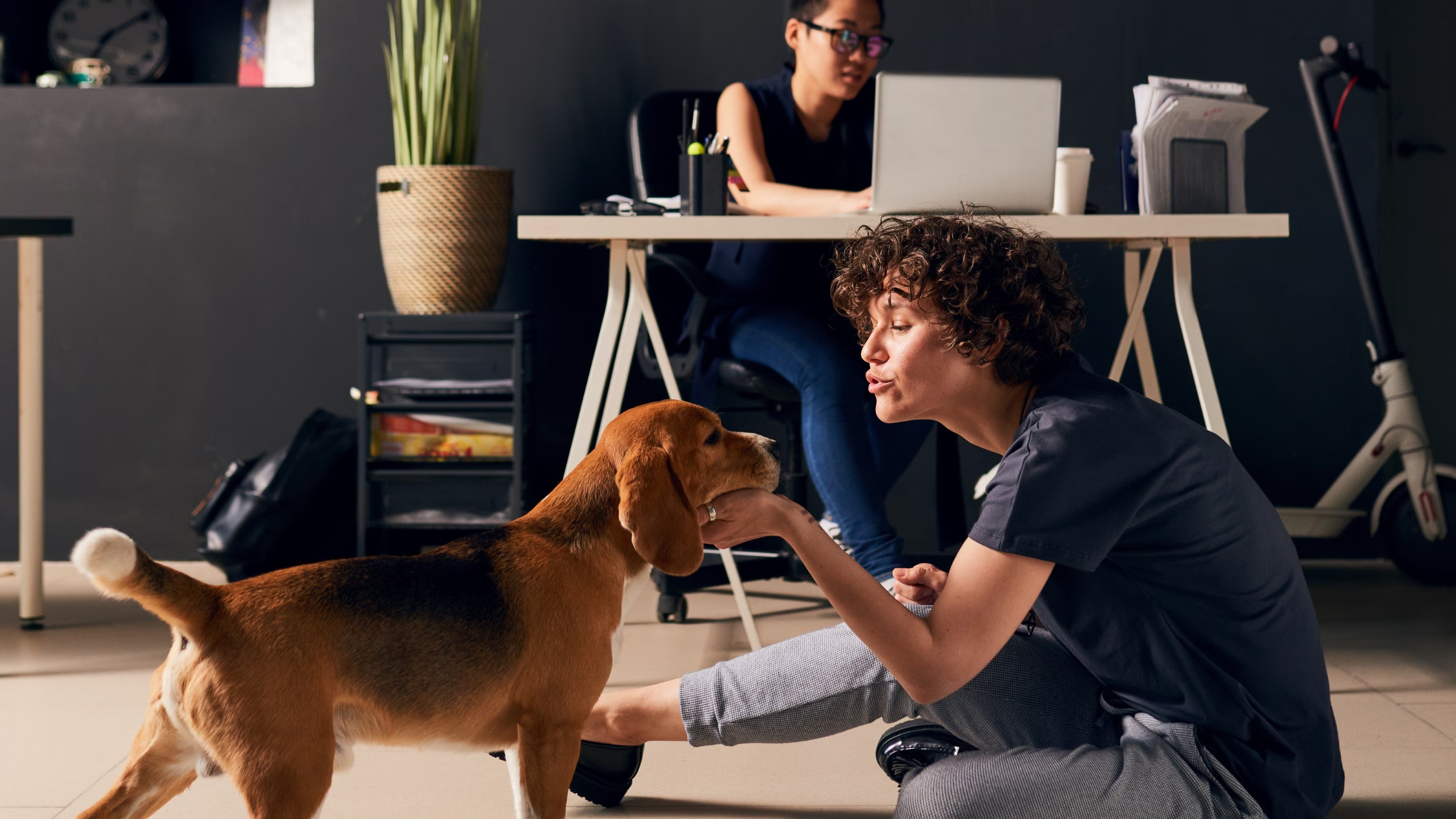
A dog-friendly coworking space cannot be a free-for-all with dogs running everywhere. Coworking space operators need to set clear expectations with dog owners. Here are the guidelines we use:
Need a starting point? Download our free coworking space pet policy template and customize it for your community.
Running a dog-friendly coworking space works well when it is managed well. Three challenges come up most often:
Allergies. Roughly 10 to 20% of people have pet allergies. Most members with mild allergies can manage in a well-ventilated space with good cleaning standards. But it is worth knowing your member base – if you have members with severe allergies, that conversation needs to happen before you open the space to dogs.
Noise. A single dog that barks disrupts the entire floor. Guideline 3 above covers this, but enforcement matters. The first time a dog barks repeatedly with no response from the owner, other members notice. Address it directly and early.
Safety. Even friendly dogs can behave unpredictably in crowded spaces. The on-leash rule in common areas (Guideline 5) handles most of this. For new dogs entering the space for the first time, a brief introduction period – letting other members meet the dog before it settles in – helps everyone feel comfortable.
Planning for these upfront, rather than reacting to them after an incident, is what separates spaces that make dog-friendly work from spaces that quietly reverse the policy after six months.

A verbal agreement is not enough. Your dog policy needs to be in writing, signed by every member who brings a dog, and reviewed during onboarding.
A basic coworking space dog policy covers:
Go over the policy with every new member during your new member orientation – not after they have already brought the dog in. Using coworking management software that supports a structured onboarding workflow makes it easier to make sure nothing gets skipped.
Dog-friendly coworking spaces aren't for everyone. Some people would just rather not be around dogs and you may limit your clientele by going this route. But in our experience, it has seldom been an issue. The members your policy attracts and retains will far outweigh the ones it does not.
Do coworking spaces allow dogs?
Some do, some don't – it depends on the operator's policy. Dog-friendly coworking spaces are a growing segment of the market because of the rise in remote work and the high percentage of remote workers who own dogs. If you are an operator considering the policy, the key factors are your member mix, your space layout, and whether you can enforce the guidelines consistently.
What should a coworking space dog policy include?
A coworking space dog policy should cover behavior requirements (friendly with people and other dogs, no barking, no aggression), hygiene standards (clean, potty trained, vaccinations current), supervision rules (owner present at all times, on-leash in common areas), liability for cleaning costs or damages, and consequences for violations. Put it in writing and review it with every new member who plans to bring a dog.
How do dog-friendly policies affect coworking space membership?
Dog-friendly policies tend to improve both member acquisition and retention. Remote workers who own dogs are less likely to leave a space where their dog is welcome because finding another dog-friendly option takes effort. The policy may deter a small percentage of prospective members who prefer a dog-free environment, but most operators find the net effect on membership is positive.
What are the biggest challenges of allowing dogs in a coworking space?
The three most common challenges are allergies (10-20% of people have pet allergies), noise from barking, and safety in shared areas. All three can be managed with clear written policies, consistent enforcement, and an on-leash rule in common areas. The operators who make dog-friendly work long-term are the ones who address these proactively rather than waiting for an incident.
How do I introduce a dog-friendly policy to an existing coworking space?
Start by surveying your current members to understand how many own dogs, how many would use the policy, and whether anyone has allergies or concerns. Write the policy before you announce it, not after. Communicate it to existing members first, give them time to ask questions, and phase in the new policy with a trial period rather than a hard launch. Review after 60 days and adjust based on what you see.
With a clear policy and consistent enforcement, a dog-friendly coworking space becomes one of the most talked-about things about your space – by the members who bring their dogs and by the ones who just enjoy having them around.
Business Tips
Team Deskworks
July 30, 2026
See how Deskworks helps coworking operators grow revenue while staying people-first.
Book a Demo

Deskworks is simple, powerful coworking management software built to automate your operations, capture every dollar of revenue, and give you more time to focus on your community.