Business Tips
Team Deskworks
September 14, 2026

A security deposit is a refundable amount of money collected upfront when someone signs up for a membership or books a space. It's held to cover things like damages, missed payments, or last-minute cancellations. Typical amounts in coworking run from around $50 for a hot desk to $200 to $500 for a private office, though the exact number depends on space type and the risk you're pricing for. It’s quite common to charge one month’s membership fee for the space as a security deposit. (As a side note, remember - you never use terms like “rent” or “lease” for coworking spaces. It’s always “membership!”)
In coworking, security deposits are most common for private offices and longer-term agreements, but they're also useful for virtual office plans and event rentals, anywhere there's potential risk to your space or revenue collection.
Security deposits aren't considered income unless or until you use the money to pay for something (like a cleaning fee or a final invoice). Until then, they're treated on your books as a liability. Think of it as money you're temporarily holding on the customer's behalf. That's why it's essential to track them separately and have a clear process for refunding or applying them when the time comes.

There are plenty of reasons coworking operators choose to collect security deposits:
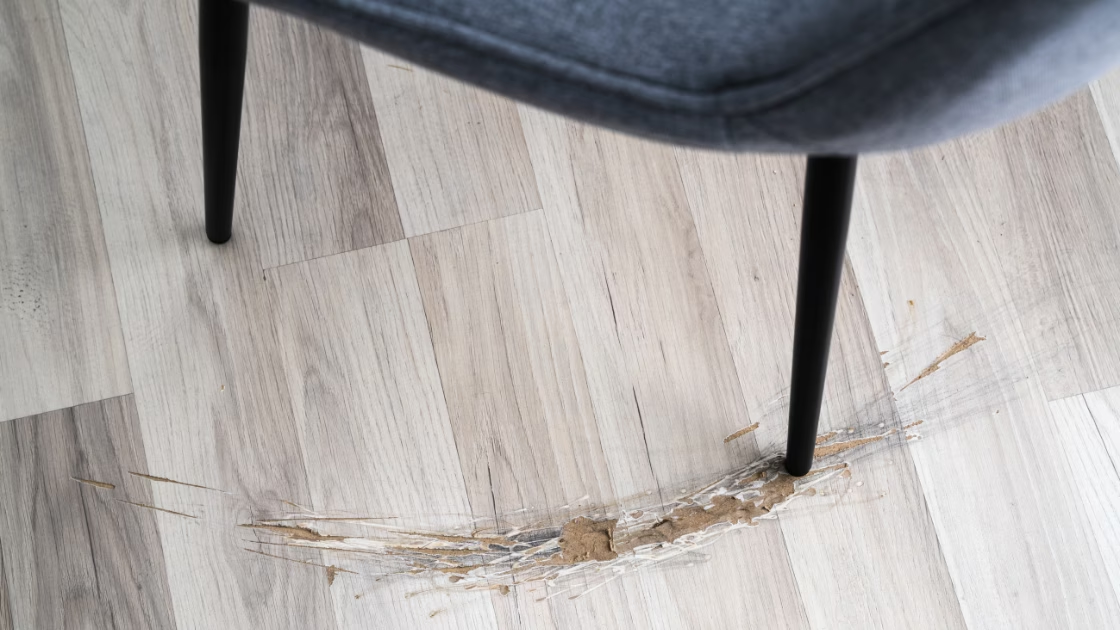
Even the most responsible members can cause accidental damages. A deposit helps cover repair costs without dipping into your operating budget. You should never charge a leaving member for normal wear and tear, of course, but you will find seriously scuffed up walls or bad stains sometimes, and you can certainly charge for those.
Sometimes members stop paying or disappear without notice. A security deposit can help offset any outstanding balance or unpaid services. If your billing infrastructure already makes it simple for you to remove an incorrect charge or process refunds cleanly (see our guide to payment processing for coworking spaces for how Deskworks approaches this), the deposit becomes a straightforward backstop rather than a manual chase for a payment that you are due.
Virtual offices and mail services are often more vulnerable to fraud. Collecting a security deposit for virtual memberships helps ensure you're not left covering costs when someone signs up, uses your address, and vanishes. The higher startup cost can also deter people from signing up with fraudulent intentions, since they know they’ll have to put money down upfront and won’t get the deposit back.

For one-time rentals like conference rooms, workshops, or private events, a deposit helps protect against last-minute cancellations, damages, or extra cleaning costs. It’s unlikely that you will want to charge a security deposit for a standard use of a conference room or a private office for a day, but if you are providing an event space, catering, or other services with the space, a security deposit is a good idea.
A deposit shows that your business takes its space seriously, and that members are expected to do the same. And if something does go wrong, you have a financial cushion to help cover unexpected damage, repairs, or other costs. It’s a simple safeguard that can help you sleep better at night.

Not every coworking space collects security deposits. Some operators choose to skip them for good reasons:
No deposit means fewer barriers for new members to sign up quickly.
Short-term or low-risk coworking plans might not justify a deposit.
If your space is designed in a way that's hard to damage (and easy to clean), you may not see the need for extra protection.
From a Deskworks team member who’s managed coworking spaces firsthand:
When I was a Community Manager at Satellite Workplaces, we didn't charge security deposits. Our memberships were primarily month-to-month, with a credit card on file, and thankfully I never had to deal with any horror stories. While we did charge a small setup fee and included language in our contract about fees for early terminations and damages, not charging a security deposit made it easier for people to sign up quickly and set us apart from a traditional office lease. Now at Deskworks, working with so many different operators, I see how deposits can be a smart move depending on the business model, plan type, and clientele. As usual, 'it depends'!
- Mia Marino, Deskworks (former Community Manager, Satellite Workplaces)
There's no single industry standard, but the ranges below (based on our own experience and industry references from platforms like PayRequest, 2025) are a common starting point:
Adjust based on your local market, member risk profile, and how much of the deposit is meant to cover damages versus unpaid balances. Some operators set the deposit equivalent to one month's membership fee, especially for private offices and longer-term agreements.

If you decide security deposits make sense for your coworking or flex office space, it's important to think through the details:

Not sold on the idea? There are other ways to protect your business:
A non-refundable fee can help cover onboarding and offboarding costs. This is the approach Mia describes above at Satellite Workplaces: a setup fee plus contract language covering early termination and damages, with no traditional deposit required. And no deposit to return when someone leaves!
Include clear termination policies for non-payment, damages, or early exits in a formal agreement signed by the member. Keep a copy on file in case you need to enforce the terms later. Consult legal counsel if you need help drafting or reviewing your agreement.
Sometimes you need backup for difficult cases. A reputable collections partner can help you recover unpaid balances. You’re unlikely to collect everything owed to you through a collections agency, especially if your membership consists of smaller companies or individuals. In these cases, you may do better simply using your local Small Claims Court.
.avif)
Whether you collect security deposits for a few members or your entire space, tracking them accurately is critical. Security deposits are a liability that must be tracked in a separate General Ledger Account, rather than in an Income Account, until you apply them to an actual charge. Manual tracking (spreadsheets, notes in a member profile) is where deposits get lost.
The right workspace management software should let you record deposits against a specific member, apply them to invoices at move-out, refund them cleanly, and pull a reconciliation report at any time. It should also keep card data in a PCI-compliant vault so the deposit charge or hold uses the same infrastructure as the rest of your billing.
Deskworks handles security deposits through the same billing and payment collection system that runs recurring membership and one-off charges, using the same PCI-compliant payment vault (Spreedly). Dedicated workflows handle collecting, applying, and reporting on security deposits.
Adding a security deposit: Simply create a new invoice and click ADD A SECURITY DEPOSIT. If the deposit is paid immediately, click ADD A PAYMENT and enter the received date, amount, notes, and payment method (credit card, ACH, check, or cash). Credit card and ACH deposits are deposited directly into your bank account; check and cash follow your normal deposit procedures.
Using a deposit against an invoice: Go to the invoice, click ADD A PAYMENT, and select Security Deposit as the payment method. This reduces the remaining balance on the member's Security Deposit Record and moves the applied amount to your income.
Reporting and accounting: Security deposits show on your Income (Cash) Report when received (because it's cash you have received) but do NOT show on your Income (Accrual) Report (because it's a liability you owe back to the member, not earned revenue). The deposit always shows on the dedicated Security Deposit Report in business analytics reports, so you can reconcile what's held and what's been released at any time.
For step-by-step click-throughs on each workflow, see the Security Deposits section of the Deskworks Support Knowledgebase.
Is a security deposit fully refundable?
Yes, a security deposit is refundable by default. It's held as a liability, not income, and returned to the member when they end their membership, provided there are no unpaid balances, damages, or contract violations to cover. Some operators refund by check or ACH, others apply the deposit against the final invoice.
How much should a coworking security deposit be?
Common industry ranges are $50 to $100 for a monthly hot desk plan, $100 to $200 for a dedicated desk, $200 to $500 for a private office, and $100 to $300 for a one-time meeting room or event rental. Some operators use one month's membership fee as the benchmark for longer-term plans. Set the amount based on the actual risk you're pricing for.
Do coworking spaces charge security deposits for hot desks?
Usually no. Short-term and low-risk plans like hot desks and drop-ins typically don't require a deposit because the potential loss is small and the barrier-to-signup impact is large. Deposits are more common for dedicated desks, private offices, and virtual memberships.
Are security deposits taxable income for coworking operators?
Not while they're being held as a security deposit. Security deposits are treated as a liability on your books, not income. In Deskworks specifically, deposits appear on your Income (Cash) Report at the moment you receive the cash, but they do NOT appear on your Income (Accrual) Report because you haven't actually earned the money yet. The deposit only becomes income when you apply it to cover an unpaid balance or a cost like a cleaning fee. Talk to your accountant about how to track them in your specific accounting software, but the accounting treatment is well established.
Can you use a pre-authorization hold instead of charging a security deposit?
Yes. Some payment platforms let you pre-authorize the card, which reserves the funds on the member's card without actually charging them, and capture the funds only if there's damage or unpaid balance to cover. Pre-authorization holds typically last up to 28 days, which fits short-term event rentals but may not work for ongoing memberships. For longer-term plans, a traditional deposit charge is still the standard.
Security deposits aren't for everyone, but they can be a smart way to protect your coworking business from the unexpected, especially for private offices, virtual memberships, and event rentals. Take the time to decide what works for your space, communicate clearly with your members, and use software that makes the process easy to manage. If your billing infrastructure already handles automatic charges and refunds cleanly, adding deposits to the same system takes minutes, not a rebuild.
Business Tips
Team Deskworks
September 14, 2026
See how Deskworks helps coworking operators grow revenue while staying people-first.
Book a Demo

Deskworks is simple, powerful coworking management software built to automate your operations, capture every dollar of revenue, and give you more time to focus on your community.